Do You Actually Need Wrist Wraps for Lifting? Here's When They Help and When They Don't
Quick Answer: Wrist wraps are genuinely useful for heavy overhead pressing, front squats, and other wrist-extension-heavy lifts where you feel joint strain, but they’re unnecessary for most pulling movements and can become a crutch if worn for every single lift regardless of load or pain.
Walk into any gym and you’ll see wrist wraps on lifters doing everything from warm-up sets to bicep curls, which has blurred what the tool is actually for. Here’s the more precise use case.

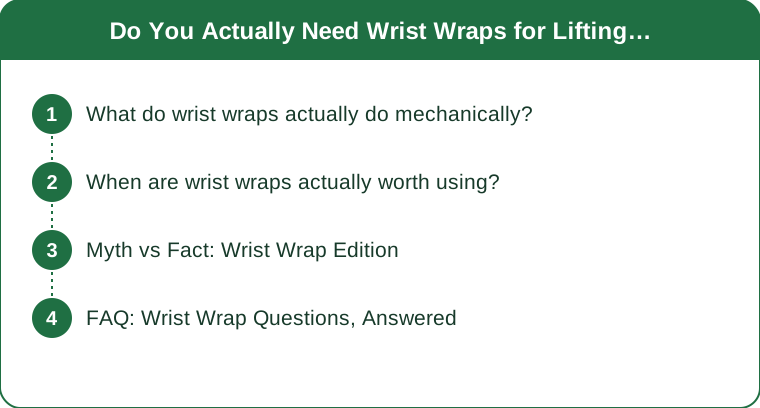
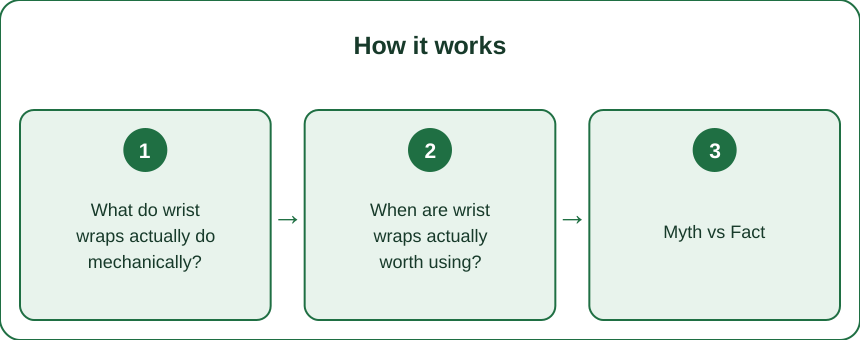
What do wrist wraps actually do mechanically?
Wrist wraps provide external compression and a rigid support point across the wrist joint, limiting how far the joint can hyperextend under load — this is most relevant during lifts where the bar’s weight pushes your wrist backward, like a heavy bench press or overhead press.
They don’t add strength or fix underlying weakness; they’re a mechanical support, similar to how a knee sleeve doesn’t build quad strength but does stabilize the joint under heavy load.
When are wrist wraps actually worth using?
Heavy overhead pressing, front squats, and heavy bench press sets are the clearest use cases, since these movements load the wrist in extension under significant weight, and any existing wrist weakness or past injury shows up quickly under that stress.
They’re also reasonable during a return from wrist injury, providing extra stability while the joint rebuilds strength and confidence under a physical therapist or coach’s guidance.

Myth vs Fact: Wrist Wrap Edition
Myth: Wrist wraps prevent injury for any lift you wear them for. Fact: They reduce hyperextension range specifically — for lifts that don’t stress the wrist in extension (most pulling movements, most lower body work), wraps provide little to no protective benefit.
Myth: Wearing wraps constantly weakens your wrists over time. Fact: There’s limited strong evidence for meaningful wrist weakening from wrap use specifically, though relying on them for every light set does mean you get less feedback about your wrist’s actual unsupported capacity.
FAQ: Wrist Wrap Questions, Answered
Should beginners use wrist wraps right away?
Not necessarily — building baseline wrist strength and mobility without wraps for lighter loads, then introducing wraps specifically for heavier working sets, tends to serve long-term joint health better than wrapping from day one.
Do wrist wraps help with wrist pain during push-ups?
Wraps aren’t typically designed for push-up wrist angles — a wrist-friendly push-up modification (fists, parallettes, or an incline) usually addresses that specific pain more directly than wrapping.
How tight should a wrist wrap actually be?
Snug enough to limit hyperextension without cutting off circulation or feeling numb — if your hand tingles or goes cold, the wrap is too tight.
TL;DR:
- Wraps limit wrist hyperextension — most useful for overhead pressing and front squats
- They don’t build strength, similar to how a knee sleeve doesn’t build quad strength
- Unnecessary for most pulling movements and light warm-up sets
- Build baseline wrist strength unwrapped before relying on them for heavy sets
Use wraps as a targeted tool for specific heavy, wrist-extension-heavy lifts — not a default accessory for every set of every session.
Keep Reading
This article is for general informational purposes only and is not medical advice. Always consult a qualified health professional for guidance specific to you.