Should You Actually Wear a Wrist Brace During Workouts, or Does It Make Things Worse?
Quick Answer: Wrist braces are useful for acute pain, high-load lifts like heavy pressing, or a known structural issue — but wearing one habitually for general wrist weakness can prevent the stabilizing muscles from actually strengthening, delaying the real fix.
You reach for the brace because your wrist feels unstable under load. That’s a reasonable instinct sometimes — and a problem in disguise other times. The difference matters more than most people realize.

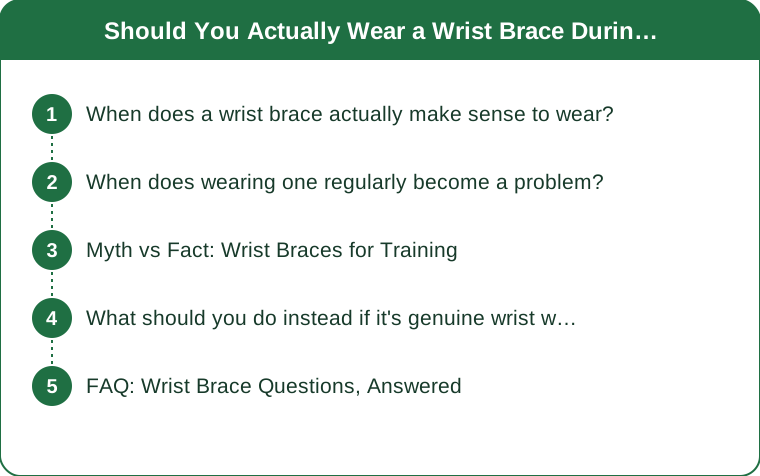
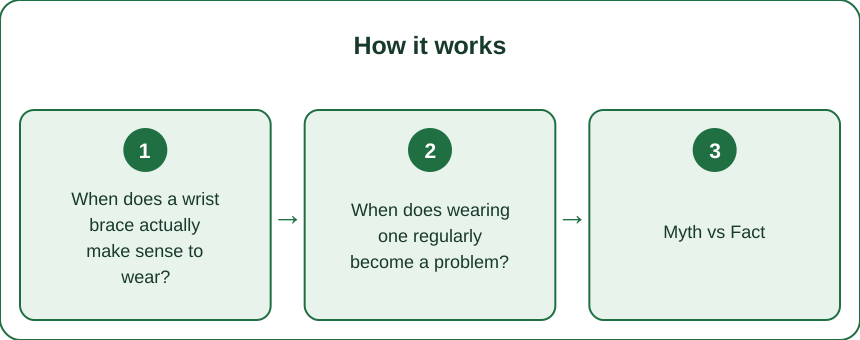
When does a wrist brace actually make sense to wear?
A brace is genuinely useful during heavy pressing movements (like bench press or overhead press) where wrist extension under load is the main stress point, or during acute recovery from a strain, where you need temporary support while healing.
It’s also reasonable for people with a diagnosed structural issue, like a prior injury or a condition like mild carpal tunnel, where a healthcare provider has specifically recommended support during certain movements.
When does wearing one regularly become a problem?
If your wrists feel weak or unstable during normal-weight, non-maximal exercises — bodyweight movements, light dumbbell work, general training — that’s usually a sign of underdeveloped wrist stabilizing muscles, not something a brace should paper over long-term.
Wearing a brace habitually in that situation lets those stabilizer muscles stay weak, since the brace is doing the stabilizing job they should be learning to do.

Myth vs Fact: Wrist Braces for Training
Myth: Wearing a brace prevents wrist injuries. Fact: Braces reduce load on stressed structures during specific movements, but they don’t build the strength that prevents injury during everyday unsupported use.
Myth: If your wrist hurts, brace it and keep training as normal. Fact: Pain during exercise (not just discomfort) is a signal to modify the movement or load, not just mask it with support.
Myth: Stronger lifters don’t need wrist support ever. Fact: Even advanced lifters commonly use wrist wraps for specific heavy pressing work — it’s about the movement demand, not skill level.
What should you do instead if it’s genuine wrist weakness?
Build a dedicated wrist strengthening routine — wrist curls, reverse wrist curls, and rotational band work done 2-3x per week meaningfully build the stabilizing strength that reduces the need for a brace over time.
This takes weeks, not days, but it’s the difference between managing a weakness indefinitely and actually resolving it.
FAQ: Wrist Brace Questions, Answered
Can wearing a wrist brace too often actually weaken my wrists?
Extended, unnecessary use for low-load activities can contribute to muscles not being challenged enough to strengthen — it’s the same principle as any joint support used beyond its actual need.
Is it fine to brace one wrist but not the other if only one feels weak?
Yes, that’s common and reasonable, especially if the weakness stems from a past injury to just that side.
How do I know if wrist pain needs a doctor instead of just training modification?
Sharp pain, swelling, or pain that doesn’t improve after a week of rest and reduced load are signs to get it checked rather than self-managing. This is general information, not medical advice.
TL;DR:
- Braces make sense for heavy pressing, acute recovery, or diagnosed structural issues
- Regular use during normal-weight training can prevent stabilizer muscles from strengthening
- Pain during exercise should prompt modification, not just masking with support
- A dedicated 2-3x/week wrist strengthening routine addresses genuine weakness long-term
A brace is a tool for specific situations, not a permanent substitute for wrist strength — know which one you actually need.
Keep Reading
This article is for general informational purposes only and is not medical advice. Always consult a qualified health professional for guidance specific to you.